
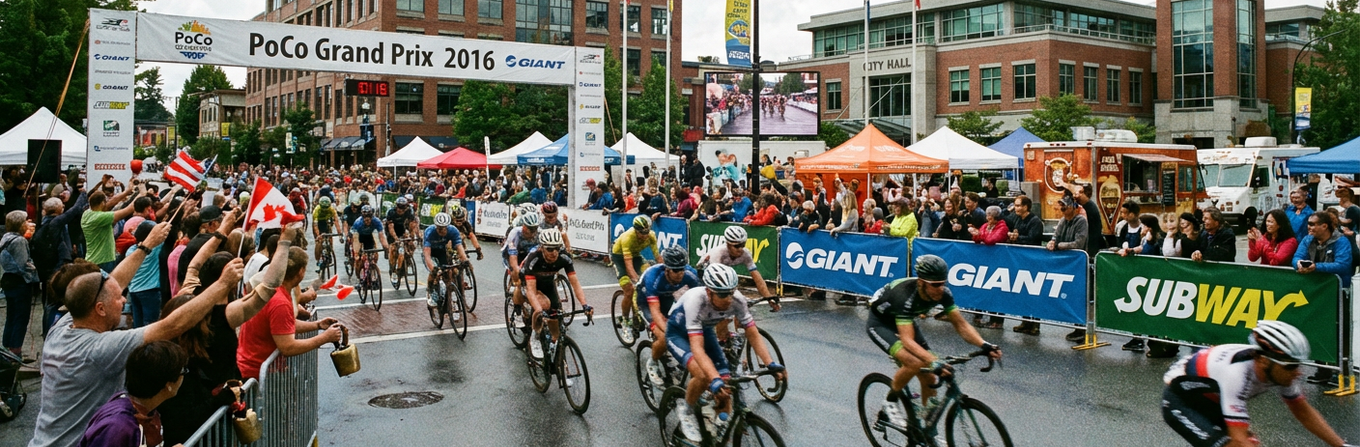
The PoCo Grand Prix, held on Friday, July 15, 2016, delivered one of the most dynamic street-level sporting events Port Coquitlam had hosted. For many local fans of GP racing culture, the event felt like a defining moment – a true Grand Prix atmosphere brought into a community setting, where professional cycling, local life, and urban space merged naturally.
From the perspective of both racing quality and public engagement, the 2016 edition stood out for one key reason: it didn’t feel like a closed professional event – it felt like a city festival built around elite cycling.
Event Overview
As part of BC Superweek, the race became more than just another GrandPrix event – it functioned as a city-scale sporting festival, comparable in structure and atmosphere to larger international prix circuits, while still retaining a strong local identity.
Detail | Information |
|---|---|
Event Name | PoCo Grand Prix |
Date | Friday, July 15, 2016 |
Location | Downtown Port Coquitlam, BC |
Circuit Length | 1.3 km |
Format | Criterium (mass start, multi-lap circuit) |
Series | BC Superweek |
Prize Purse (Series) | Over $120,000 across events |
Riders | 200+ international professional cyclists |
Race Types | Pro, amateur, youth, kids, corporate |
While the 2016 edition marked a major milestone, local cycling communities had already been familiar with the event brand from earlier years, including references to Grand Prix 2015 programming and early development phases of the race model in Port Coquitlam.
World-Class Racing on a Local Street Circuit
The criterium structure followed classic Gran Prix logic: short laps, repeated accelerations, technical corners, and constant pressure on riders’ positioning, creating a race that demanded both physical power and tactical intelligence.
Men’s Pro Race (PGP1)
The men’s pro race featured elite riders from international teams and top North American squads. The criterium format emphasized:
- Repeated sprint efforts
- Tactical breakaways
- Prime lap sprints for cash rewards (primes)
- High-speed pack riding through tight corners
The racing style was fast, physical, and relentless. Because of the short circuit, spectators were able to follow the full race narrative – attacks, chases, crashes avoided, and final sprints – without losing sight of the action.
Women’s Pro Race (PGP2)
The women’s pro race brought together top female cyclists from around the world. The competition was equally intense and technically demanding, with strong team tactics, coordinated lead-outs, and repeated sprint primes. The race format highlighted the depth of women’s professional cycling and gave equal visibility to elite female athletes – something still not common at many cycling events in 2016.
Inclusive Racing Structure
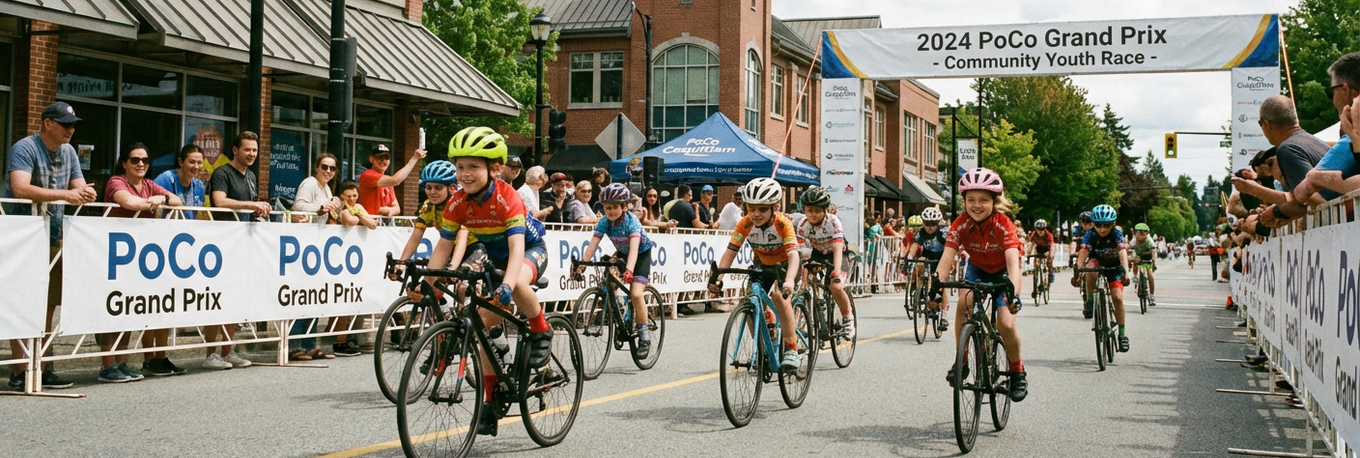
One of the strongest elements of the PoCo Grand Prix was how the event structure included riders at every level:
Kids Race (Ages 6-12)
Children were able to ride the same course used by professionals, creating a powerful connection between grassroots cycling and elite sport.
Youth Race (Ages 12-16)
Young competitive riders raced alongside the atmosphere of a professional event, giving them real exposure to high-level racing culture.
For young riders, the PoCo Grand Prix served as a gateway into competitive cycling culture, bridging local development programs with broader academic and athletic institutions, including cycling communities connected to UBC bike initiatives.
Cat 3/4 Races
Local developing riders had a legitimate competitive platform, not just a symbolic presence.
Corporate Challenge
Local businesses formed teams and participated in a relay-style race, making companies active participants rather than just sponsors.
This structure turned the event into a multi-layered community experience, not just a pro showcase.
Community Impact and City Visibility
Former Port Coquitlam Mayor Greg Moore publicly framed the event as more than sport – as a city-branding moment for Port Coquitlam itself. And in practice, that vision materialized clearly.
The event achieved:
- Strong downtown foot traffic
- Local business engagement
- Tourism visibility through BC Superweek coverage
- Community volunteer participation
- Citywide identity building through sport
Local media coverage and PoCo news outlets regularly framed the event as a symbol of Port Coquitlam’s evolving urban identity, not just a sports competition. The race did not isolate spectators behind barriers – it integrated them into the atmosphere. Restaurants, cafés, and shops benefited directly from the crowds, while residents experienced their city as a live sporting venue rather than a passive host.
The downtown circuit design was clearly visible and accessible, with spectators easily navigating the PoCo map layout of streets and race zones without confusion or congestion.
Spectator Experience
For spectators, the event functioned not only as a race, but as a full GP cycle experience – continuous movement, repeated visual contact with riders, and a rhythm that made the race easy to follow even for non-expert audiences:
What worked:
- Continuous visibility of riders
- Fast race tempo
- Frequent sprint moments
- Short lap structure (high engagement)
- Mixed programming (races + community activities)
Additional elements included:
- Live music
- Community booths
- Family activities
- Volunteer engagement
- Corporate participation
- Festival-style layout
The result felt closer to a European street festival than a traditional closed-course race.
BC Superweek Integration
As part of the broader BC Superweek ecosystem, the event aligned with other professional race formats, reinforcing its position within Canada’s national Grand Prix schedule and strengthening its legitimacy as a serious competitive platform.
As the fourth event in the BC Superweek series, PoCo Grand Prix held a strategic position between major races like:
- Tour de Delta
- Gastown Grand Prix
- Giro di Burnaby
- Tour de White Rock
This placement ensured:
- High-quality rider attendance
- Competitive race intensity
- Media and sponsor visibility
- International team participation
The shared $120,000+ prize purse across the series attracted serious professional competition, which elevated the quality of racing in Port Coquitlam specifically.
Volunteer and Community Infrastructure
Beyond the professional side, the race also attracted everyday fitness communities, including local gyms and wellness spaces such as Steve Nash Fitness World PoCo, whose members were present as volunteers, spectators, and supporters.
Behind the scenes, the event relied heavily on local volunteers and host families. Community members supported logistics, safety, organization, and even athlete housing. This created a rare structure where residents were not just spectators – they were operational partners in the event’s success.
That model strengthened trust, ownership, and the race’s long-term sustainability within the community.
Overall Assessment
Strengths
- High-level international racing
- Strong community integration
- Inclusive race structure
- Excellent spectator visibility
- Downtown economic impact
- Youth development focus
- Corporate engagement model
Limitations
- One-day format limited broader tourism stays
- Weather dependency is typical for street racing
- Tight circuit increased crash risk (standard for criteria)
PoCo Grand Prix in Other Years – Growth Beyond 2016
The PoCo Grand Prix did not remain a one-off success in 2016 – it evolved into a recurring, multi-format community and professional cycling event that continued to grow within the BC Superweek series.
Notable Later Editions
2017
- Introduction of expanded Kids’ Race programming
- Stronger focus on family participation
- Youth engagement became a core identity element
- Early evening race format (5:00-7:00 pm) increased accessibility for families
2018
- Full downtown transformation into a street festival
- 1.3 km circuit used for ~50 laps
- Integration of:
- Business trade shows
- VIP experience areas
- Beverage garden
- Live entertainment
- Thousands of spectators attended
- Expanded community programming beyond racing
2019
- Continued growth of the Kids’ Race, sponsored by Norco Bicycles
- Youth participation expanded to ages 3-12
- Event became one of the most anticipated family-oriented elements of BC Superweek
- Strong volunteer infrastructure and local business participation
Evolution of the Event Model
Across the years, the PoCo Grand Prix shifted from being primarily a professional criterium race into a hybrid model:
From:
Professional race + local spectators
To:
Professional race + youth development + family programming + business engagement + community festival
This evolution positioned the event not just as a cycling competition, but as a city-scale community platform built around sport.
Rather than functioning as a standalone bike GP event, PoCo Grand Prix developed into a long-term urban sports platform – one that blended elite competition, youth development, business engagement, and community identity into a single annual structure.
The PoCo Grand Prix 2016 succeeded as both a professional sporting event and a community festival. It demonstrated how elite cycling could be embedded into a local urban environment without disconnecting from residents, families, or local businesses.
Rather than feeling like a closed professional race imported into a city, it felt like a city-owned event that happened to host world-class athletes.
From a long-term perspective, it strengthened Port Coquitlam’s identity within BC Superweek, elevated local cycling culture, and set a model for how smaller cities could host international-level sport without losing community focus.
In simple terms:
It wasn’t just fast.
It wasn’t just professional.
It was genuinely communal – and that’s what made it work.
This article is an independent editorial review created for informational purposes only. We are not affiliated with the PoCo Grand Prix, BC Superweek, the City of Port Coquitlam, event organizers, sponsors, or any related organizations. All trademarks, event names, and references remain the property of their respective owners. The content reflects independent analysis and public information and is not intended to represent official communications, endorsements, or partnerships.